Latest
Summer half term programmes
Summer half term programmes
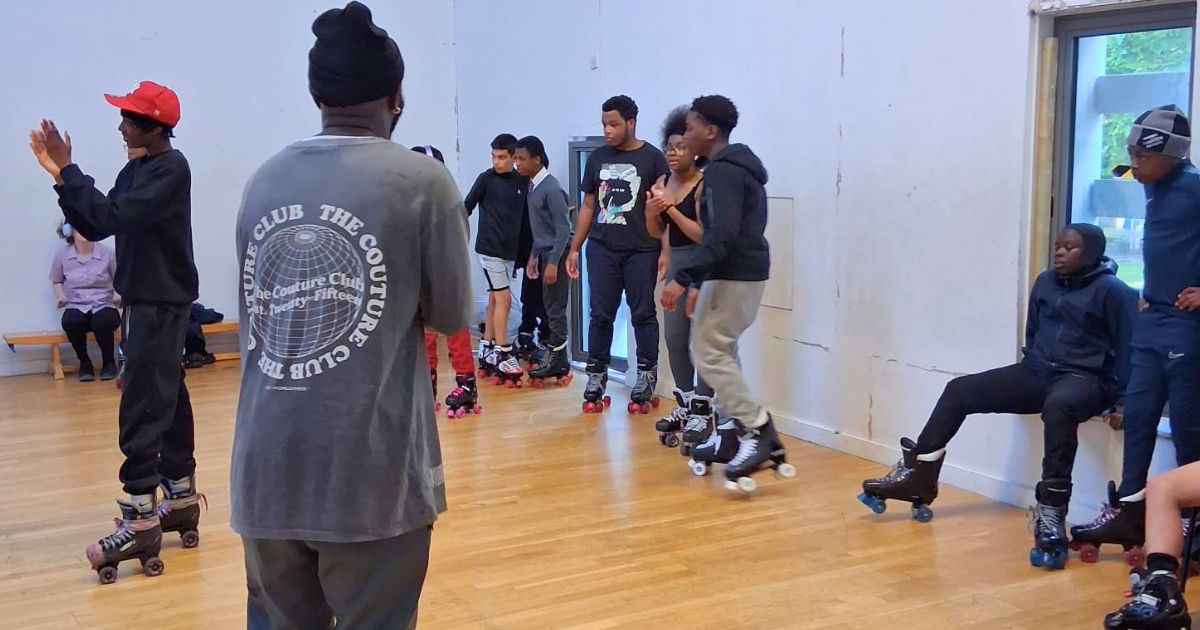
Our summer half term programmes are here, with lots of fun activities for young people aged 10 – 19 (25 with SEND) at our youth hubs or 6-15 years old (18 with SEND) at our adventure playgrounds.
Our summer half term programmes will be taking place between Tuesday 26 May and Friday 29 May. Please note, we’ll be closed on Monday 25 May as it’s a bank holiday!
Please click on the links below to view our programmes for our youth hubs and adventure playgrounds.
Forest Road Youth Hub – 29 Forest Road, Dalston, E8 3BY
020 8356 2200
- 10 – 13 years, Monday to Friday 11am — 3.00pm
- 13 – 19 years, (up to 25 with SEND): Monday to Friday 4pm— 8pm
The Edge Youth Hub – 7 Woodberry Grove, Woodberry Down, N4 1SN
020 8356 1063
- 10 – 13 years, Monday to Friday 11am — 3.00pm
- 13 – 19 years, (up to 25 with SEND): Monday to Friday 4pm— 8pm
Young Carers – The Edge Youth Hub, N4 1SN & Forest Road Youth Hub, E8 3BY
Many young people don’t see themselves as young carers. However, if you are looking after someone with a disability, long-term physical illness, mental health condition, or drug and alcohol problems, then we can help.
View the young carers summer half term programme here. Contact yh.youngcarers@hackney.gov.uk if you have any further questions.
Young Hackney’s Adventure Playgrounds, Shoreditch and Hackney Marsh, will be open for fun and exciting play activities during half term for children aged 6 – 15 (up to 18 with SEND).
Hackney Marsh Adventure Playground – hackneymarshap@hackney.gov.uk 020 8986 7245
- Tuesday 26 May to Friday 29 May, 10am – 1pm & 2pm-5pm
Shoreditch Adventure Playground – shoreditchap@hackney.gov.uk 020 7729 3770
- Tuesday 26 May to Friday 29 May, 10am –5pm
All young people are required to have a Young Hackney membership to attend sessions. If you have submitted a membership form in the past, this does not need to be submitted again.
If you are currently not a member of Young Hackney, please print and complete the membership form and hand the completed form into your preferred Youth Hub or Adventure Playground.
Alternatively, please fill out the form and email it to one of the following people:
- kane.sewell@hackney.gov.uk (Forest Road)
- TheEdgeYouthHub@hackney.gov.uk(The Edge)
- hackneymarshap@hackney.gov.uk (Hackney Marsh Adventure Playground)
- shoreditchap@hackney.gov.uk (Shoreditch Adventure Playground)
Concorde and Stoke Newington Youth Hubs will also be running an summer half-term programme.
Concorde Youth Hub – Kingsmead Way, Homerton, E9 5PP
020 8510 0979
- 10 – 13 years, Monday to Friday 1pm — 5pm
- 14 – 19 years, (up to 25 with SEND): Monday to Friday 6pm — 9pm
View the half term programme here.
Stoke Newington Youth Hub – Milton Gardens Estate, Stoke Newington, N16 8TS
020 7923 1633
- 10 – 19 years, Monday to Friday 4pm — 8pm
View the half term programme here.
To sign up to attend Concorde and Stoke Newington’s sessions, please email jobrodie-mends@hmp.org.uk.
More posts
- Upcoming closures next week
- Summer Term Programmes
- The Edge will be closed next week
- Easter holiday programmes
- Special award ceremony recognises young people’s achievements
- Youth Opportunity Fund awardees announced
- Spring half term programmes
- Safety Matters Week: Learn real life skills that keep you safe
- Spring Term Programmes
- Older posts